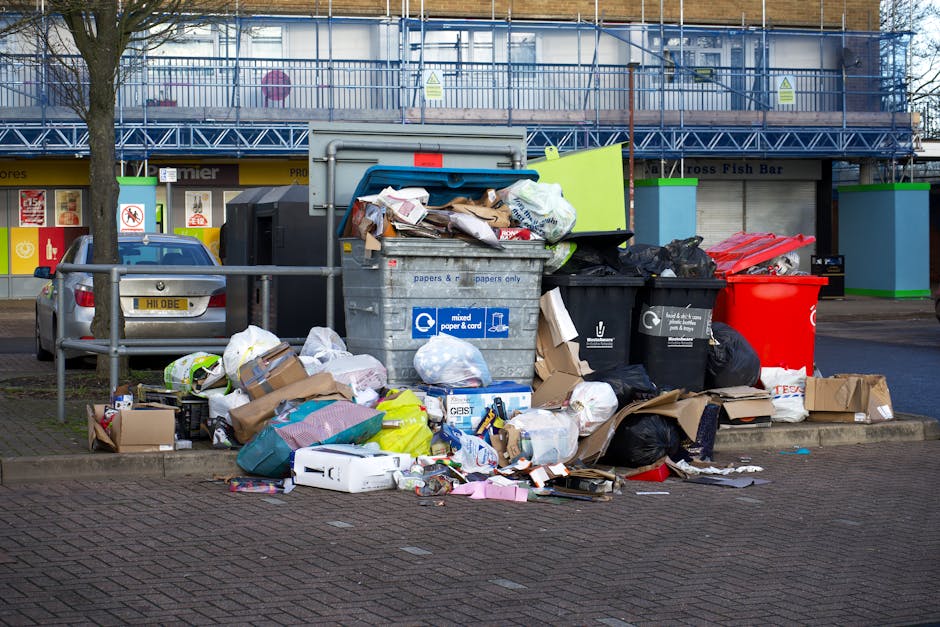
Westminster Council Bulky Waste Permits Near Regent's Park: What You Need to Know Before You Book
If you are trying to sort out Westminster Council bulky waste permits near Regent's Park, you are probably doing one of three things: clearing a flat, getting rid of old furniture, or dealing with a pile of items that has quietly grown legs and taken over a hallway. It happens. Regent's Park homes and nearby Westminster streets can be tight on space, awkward for parking, and a little unforgiving when you leave waste decisions to the last minute. This guide explains what the permit issue usually means, how bulky waste collections and skip-style clearances differ, and what the practical options are when you want the job done properly, without a headache.
We will keep it grounded and local. No fluff, no guesswork, just a clear walkthrough of the choices, the risks, and the sensible next step if you want a smooth clearance.
Why Westminster Council bulky waste permits near Regent's Park Matters
Big waste is never just "one thing". A sofa, a mattress, a broken desk, a wardrobe, a few bags of dismantled shelving, and suddenly you are looking at an awkward logistical puzzle. Near Regent's Park, that puzzle gets harder because of restricted parking, controlled zones, busy pavements, and the simple fact that many buildings in the area were never designed with modern clearance work in mind.
That is why the permit question matters. If you are arranging collection with a van, a skip, or any clearance vehicle that needs to pause outside the property, you need to know whether the job requires a permit, a loading bay, timed access, or a different method altogether. It is not just admin. It affects timing, cost, and whether the removal happens cleanly or turns into a frustrating back-and-forth with enforcement, neighbours, or the building manager.
Key point: in dense parts of Westminster, the cheapest option on paper is rarely the cheapest in practice if it leads to delays, parking problems, or a second visit. Truth be told, that is where many small jobs become expensive.
If you are also clearing a flat, a home, or an office, it can help to look at a broader clearance approach rather than treating each item as a one-off problem. Services such as flat clearance, house clearance, and office clearance can be a better fit when the waste is mixed and the access is awkward.
How Westminster Council bulky waste permits near Regent's Park Works
The phrase can mean slightly different things depending on the exact setup. Some people mean council-led bulky waste collection. Others mean a private clearance crew needing permission to park or load outside the property. And sometimes they mean both. That is where the confusion starts, honestly.
Here is the practical version:
- Identify the waste type. Is it furniture, general rubbish, DIY debris, garden waste, or office contents? The answer affects what service you need.
- Check access conditions. Regent's Park streets and nearby Westminster locations can have resident bays, loading restrictions, timed access, concierge requirements, or no-stopping areas.
- Decide whether a permit is needed. For some collections, the vehicle may need permission to wait, load, or occupy part of the road space. For others, the crew can work from private access or from a legal loading point.
- Match the method to the job. A single bulky item may suit a simple collection. A whole flat, garage, or office usually needs a more organised clearance plan.
- Book with the right timings. Early mornings, off-peak hours, and clear access windows can make a huge difference.
One thing people often overlook is that bulky waste rarely arrives in neat, council-friendly categories. A pile of old furniture can include metal, wood, fabric, electricals, and sometimes a bit of builder's waste from a rushed refurbishment. For that kind of mixed load, a flexible waste removal service is often the more realistic option. You can see how that fits with general waste removal when the items are not limited to one material stream.
Regent's Park also has its own rhythm. Morning traffic, school runs, delivery vans, tour traffic near the park edges, and the general squeeze of central London streets can all affect the removal window. So, yes, permits matter. But timing and access matter just as much.
Key Benefits and Practical Advantages
When the permit and access side is handled properly, the whole clearance becomes calmer. You notice it immediately. Fewer calls, fewer delays, less standing around watching a van look for a place to stop. Nice, honestly.
- Less risk of parking issues: Proper planning helps avoid awkward enforcement problems or blocked access.
- Faster turnaround: The right permit or loading arrangement can save a lot of waiting.
- Better neighbour relations: Nobody likes a loud, delayed clearance that spills into the afternoon.
- Cleaner compliance: Waste should be handled lawfully and taken to the right destination.
- Reduced stress for residents and managers: Helpful if you are a landlord, tenant, managing agent, or business owner.
- More suitable for mixed loads: Especially useful when furniture, bags, and heavier items all need to go together.
There is also a less obvious benefit: a proper plan tends to protect the property itself. Narrow stairwells, communal entrances, polished floors, and shared hallways are easy to damage when the removal is rushed. A crew that knows how to work carefully around these spaces is worth far more than one that just turns up with a van and optimism.
For larger items, the same logic applies. If your bulky waste is really old sofas, tables, or broken cabinets, the job may sit closer to furniture clearance or furniture disposal than a basic bin-day style collection.
Who This Is For and When It Makes Sense
This topic matters to more people than you might think. If you are near Regent's Park and dealing with bulky items, you may fall into one of these groups:
- Tenants leaving a flat with furniture that will not fit the lift or the new place.
- Landlords clearing left-behind items between lets.
- Managing agents dealing with a communal collection point or blocked storage area.
- Homeowners replacing old furniture or clearing a room for renovation.
- Office managers getting rid of desks, chairs, filing cabinets, or archive clutter.
- People downsizing after years of collected "maybe useful" items. We all have them.
It makes sense when the waste is too large for normal bins, too awkward to carry yourself, or too mixed to handle in one small trip. It also makes sense when you are short on time. Let's face it, most bulky waste jobs do not appear on a peaceful Saturday morning. They appear the day before a move, or right after a builder says, "We'll need this area clear."
If you are in a smaller property or a top-floor flat, a loft clearance or home clearance can often be more practical than trying to move bulky items piecemeal.
Step-by-Step Guidance
If you want the process to go smoothly, work through it in a tidy order. Not glamorous, but effective.
- List everything that needs to go. Write it down room by room. Include odd items like broken mirrors, dismantled shelving, and old lamps. Small bits add up.
- Separate bulky waste from hazardous or restricted items. Paints, solvents, fridges, and certain electricals may need special handling. Do not mix them blindly.
- Check the property access. Measure staircases, note lift sizes, ask about loading bays, and flag any concierge rules.
- Confirm whether road space or loading permission is needed. If the vehicle must stop where parking is limited, this is where the permit question usually comes up.
- Decide whether a council route or private clearance route is better. For a single item, the council route may be fine. For timed, multi-item, or access-sensitive jobs, a private crew is often easier.
- Book the job with clear instructions. Tell the crew exactly what needs removing and where it is located.
- Prepare the items. Empty drawers, unplug appliances, remove personal items, and make paths clear. It helps more than people expect.
- Confirm recycling and disposal details. A responsible provider should explain what happens to the waste after collection.
A sensible extra step is to check whether your clearance provider can handle the wider job, not just the bulky items. If there is broken furniture, office clutter, or renovation debris in the mix, a broader builders waste clearance or office clearance approach may save time and reduce repeat visits.
Expert Tips for Better Results
Here is the stuff that tends to make the biggest difference on the day.
- Do not leave access planning until the morning of the job. A last-minute loading issue can throw off the whole schedule.
- Take photos of the bulky items first. This helps with accurate quoting and avoids surprises.
- Group similar items together. That makes lifting, sorting, and recycling easier.
- Use labelled piles if the property has multiple rooms. It sounds fussy, but it saves time.
- Ask how fragile areas will be protected. Corners, flooring, and lifts matter in apartment buildings.
- Be honest about volume. Understating the load usually leads to a messy second booking.
One tip that people rarely hear: if the load includes anything with resale or reuse potential, mention it. Some items can be diverted from disposal and sent for reuse where suitable. That is not only better for sustainability, it can make the job feel a little less wasteful. You might be surprised how often a nearly-new chair or desk has a second life.
If sustainability matters to you, it is worth reading more about the company's approach to recycling and sustainability. In a city like London, that detail is not cosmetic. It is part of responsible waste management.
Common Mistakes to Avoid
Most clearance problems are not dramatic. They are just a stack of small mistakes that build into a stressful afternoon.
- Assuming every bulky waste job is the same. One sofa is not the same as a full flat clearance.
- Forgetting parking or access rules. This is the big one near Regent's Park.
- Leaving items in communal areas too long. That can cause complaints or building-management issues.
- Not checking what is excluded. Certain items need special handling.
- Booking too late. If you need a specific time window, say so early.
- Mixing clean reusable items with dirty waste. It can reduce reuse potential and complicate sorting.
A very human mistake is simply underestimating the pile. "It's just a few bits" becomes a van load, then a second round, then a sigh from everyone involved. Been there, seen it. Better to overdescribe the job than underdescribe it.
Tools, Resources and Recommendations
You do not need fancy tools, but a few practical things will make the job easier:
- A tape measure: Useful for checking whether wardrobes, mattresses, or cabinets can exit safely.
- Sticky notes or tape labels: Good for marking what stays and what goes.
- Phone photos: Helpful for quoting and planning access.
- Bag cutters or screwdrivers: Handy if you are dismantling flat-pack furniture.
- Protective gloves: Especially useful when handling dusty storage items or broken pieces.
- Building access notes: Concierge times, entry codes, lift limits, and loading instructions all belong in one place.
From a service perspective, the most useful pages on the site for this kind of job are usually the ones covering the exact type of clearance, such as garage clearance for storage overflow, garden clearance for outdoor bulky waste, and waste removal when the job is mixed and straightforward enough to move in one visit.
For pricing clarity, it is sensible to review pricing and quotes before booking. The best quote is not always the lowest one. The best quote is the one that matches the actual amount of waste, the access conditions, and the level of service you need. That sounds obvious, but people still get caught out.
Law, Compliance, Standards, or Best Practice
Without pretending to give legal advice, there are some basic standards worth keeping in mind. Waste should only be handled by a legitimate carrier, and disposal should be lawful and traceable where required. If a clearance provider seems vague about where the waste goes, that is a bad sign. Simple as that.
In practical terms, good practice means:
- Using a responsible waste carrier for collection and transport.
- Avoiding obstruction of roads, pavements, or emergency access.
- Respecting parking, loading, and timing restrictions in Westminster.
- Separating reusable items where possible to reduce unnecessary disposal.
- Handling electricals and special items carefully so they are not mixed into unsuitable waste streams.
In a busy area near Regent's Park, these basics matter more than people assume. One badly parked van or an overlong loading stop can create friction fast. Good operators work around that by planning properly, protecting the property, and keeping the collection efficient. That is the standard to look for.
If the job is related to workplace clean-up, moving stock, or office refurbishment, business waste removal is often a better fit than a household-style bulky waste approach. The compliance and handling needs can be different, especially for larger commercial clearances.
Options, Methods, or Comparison Table
Choosing the right route depends on what you are clearing, how fast it needs to happen, and what the access is like. Here is a practical comparison.
| Option | Best for | Pros | Watch-outs |
|---|---|---|---|
| Council bulky waste collection | Single or small number of items | Simple, familiar, suitable for light jobs | Can be less flexible on timing and item types |
| Private clearance service | Mixed bulky loads, flats, offices, urgent jobs | More flexible, usually faster, often easier for access issues | Quote depends on volume, access, and sorting needs |
| Skip-style solution | Ongoing renovation or larger disposal projects | Good when waste builds up over several days | May require parking or placement permission and suitable space |
| DIY removal | Very small loads and easy access | Can work for isolated items | Time-consuming, physically heavy, and not ideal for tight London streets |
Near Regent's Park, the private clearance route is often the least frustrating for mixed loads because it can work around access constraints. If the waste is mostly household furniture, a specialist furniture disposal or furniture clearance solution may be more efficient than trying to force everything into a one-size-fits-all process.
Case Study or Real-World Example
Imagine a second-floor flat near Regent's Park with a corner sofa, a dining table, two chairs, a mattress, and some packed boxes from a storage cupboard. The lift is small, the stairwell turns sharply at the landing, and the road outside has limited stopping room before mid-morning. Classic London clearance scenario, really.
The resident first assumes a quick council collection will solve it. Then they notice the appointment window does not line up with move-out day, and the items need carrying through a shared entrance where neighbours come and go all morning. That is where the plan changes.
A practical route would be to:
- confirm what items are being removed,
- check whether the vehicle can legally stop close enough to load,
- decide whether a permit or timed loading arrangement is needed,
- choose a clearance crew that can move the items quickly and carefully, and
- separate anything reusable from the waste.
The result is usually a smoother, tidier experience. No one is standing in the corridor with a dismantled table leg while the clock ticks on. The flat gets cleared, the access route stays orderly, and the building manager is less likely to complain. Small win, but a real one.
Practical Checklist
Use this before booking or collecting bulky waste near Regent's Park:
- List all bulky items room by room.
- Separate furniture, general rubbish, electricals, and any DIY waste.
- Check whether access is via lift, stairs, courtyard, or street loading.
- Confirm if parking, loading, or council permission is required.
- Measure larger items and note any dismantling needed.
- Take photos for quoting and planning.
- Set aside reusable items before collection day.
- Ask about recycling, reuse, and disposal methods.
- Make sure the path to the exit is clear.
- Keep building keys, codes, or concierge instructions ready.
- Review timing carefully so the collection fits your move, refurbishment, or handover.
If the clearance is part of a move or a broader property tidy-up, services like home clearance and house clearance can often bundle the work into one sensible visit rather than several small ones.
Expert summary: Near Regent's Park, bulky waste jobs are usually won or lost on access planning. If you sort the timing, the parking or permit issue, and the item list early, the rest is much easier.
For company details and service standards, you can also review the page about the team at about us and the practical booking route on contact us. If you want reassurance around how the business operates, the pages on health and safety policy, insurance and safety, payment and security, and terms and conditions are worth a look too.
Conclusion
Westminster Council bulky waste permits near Regent's Park are less about paperwork for its own sake and more about making the job workable in a very real London setting. Tight streets, controlled parking, busy buildings, and mixed waste all combine to make planning important. If you get the access, timing, and item list right, the whole process becomes far less stressful.
The best approach is usually the one that fits the property, the volume of waste, and the level of urgency. Sometimes that is a council collection. Sometimes it is a private clearance service. And sometimes it is a more complete property clear-out that handles bulky waste alongside other items in one clean sweep.
Get a free quote today and see how much you can save.
Once the clutter is gone, the room feels different. Quieter, lighter, easier to breathe in. Funny how much peace can come from one simple clearance done properly.
Frequently Asked Questions
Do I need a permit for bulky waste collection near Regent's Park?
It depends on the type of collection, where the vehicle will stop, and whether road space or loading access is affected. In Westminster, parking and loading conditions can be tight, so it is worth checking the access setup before booking.
What counts as bulky waste?
Bulky waste usually means large household items that do not fit in normal bins, such as sofas, beds, wardrobes, tables, chairs, and similar oversized items. In practice, mixed loads can also include dismantled shelving or packed household clutter.
Is council bulky waste collection better than private clearance?
For a single item or a very small load, council collection may be fine. For flats, urgent moves, mixed furniture, or awkward access near Regent's Park, a private clearance service is often more flexible and less stressful.
How do I know if parking restrictions will affect my collection?
Look at whether the vehicle needs to stop on-street, in a loading bay, or near a controlled area. If access is limited, ask the provider early so they can plan around the restrictions rather than discover them on the day.
Can bulky waste include furniture and office items together?
Yes, often it can. That said, mixed loads may be better handled as a broader clearance rather than a single-item collection. Items like desks, chairs, filing cabinets, and old sofas can usually be assessed together.
What should I do before the collection day?
Sort the items, clear a route to the exit, remove personal belongings, and take photos if needed. If you can group similar items together, the collection is usually quicker and cleaner.
Are there items that need special handling?
Yes. Electrical items, fridges, paint, solvents, and other restricted materials may need separate handling. It is best not to mix them into a general bulky waste pile without checking first.
How much does bulky waste removal cost?
Costs vary depending on volume, access, item type, and whether sorting or dismantling is needed. A quote based on the actual load is usually more reliable than a rough guess over the phone.
What if my bulky waste is in a flat with no lift?
That is very common near Regent's Park and nearby Westminster streets. You will want to mention stair access, floor level, and any tight turns in advance so the crew can plan the lifting safely.
Can bulky waste be recycled or reused?
Often, yes. Depending on the condition of the items, some furniture and materials may be suitable for reuse, recycling, or responsible diversion from disposal. A good provider should be able to explain the process clearly.
What is the easiest way to arrange the right service?
Start by listing the items, checking access, and deciding whether the job is just bulky waste or a wider clearance. If the job is mixed or time-sensitive, a broader service such as waste removal or a property clearance is usually the smoother route.
Who should I contact if I need help deciding?
If you are unsure whether your job needs a permit, a loading plan, or a different clearance method, speak to a clearance provider with local experience. For the practical next step, use the site's contact us page and explain the items, location, and timing as clearly as you can.
For more information on how services are handled, you can also review the company's complaints procedure, cookie policy, and accessibility statement.